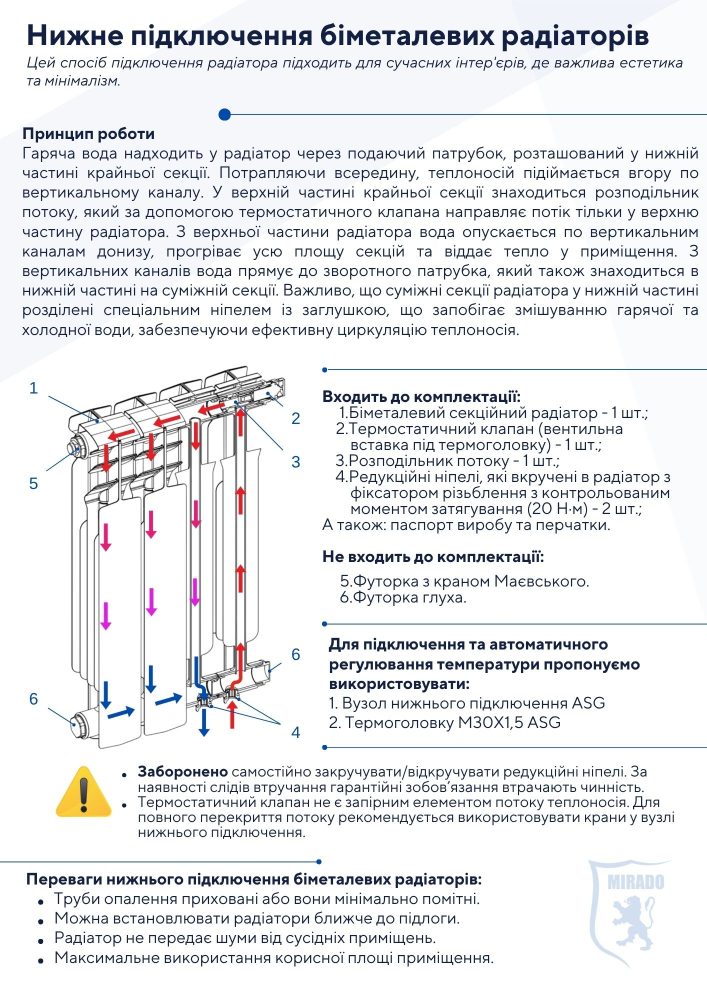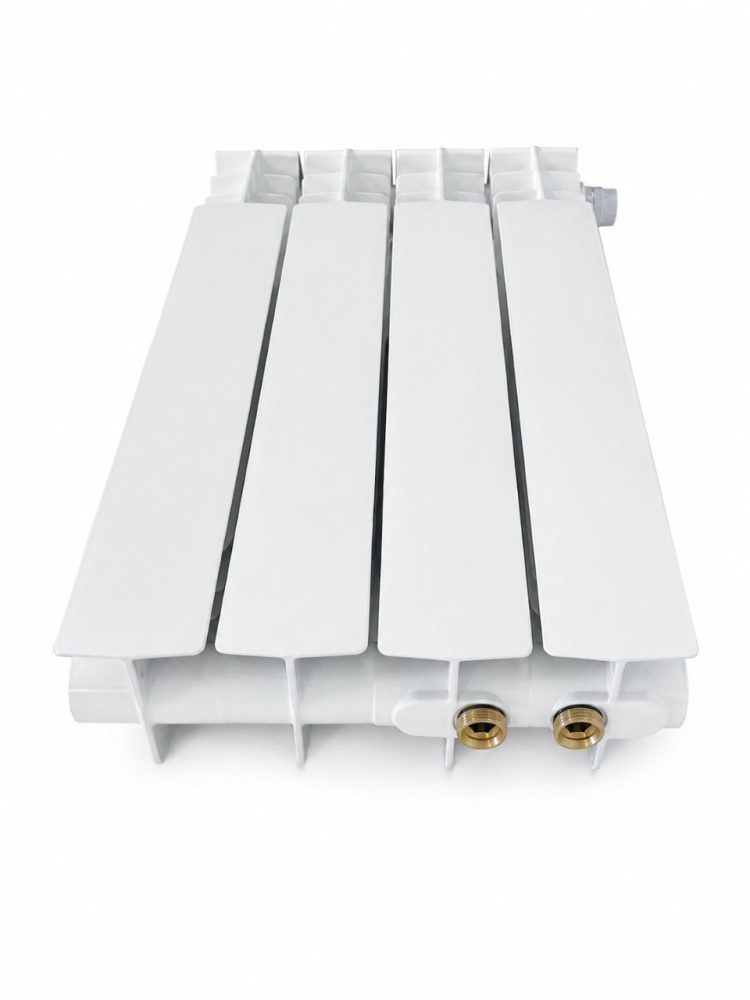
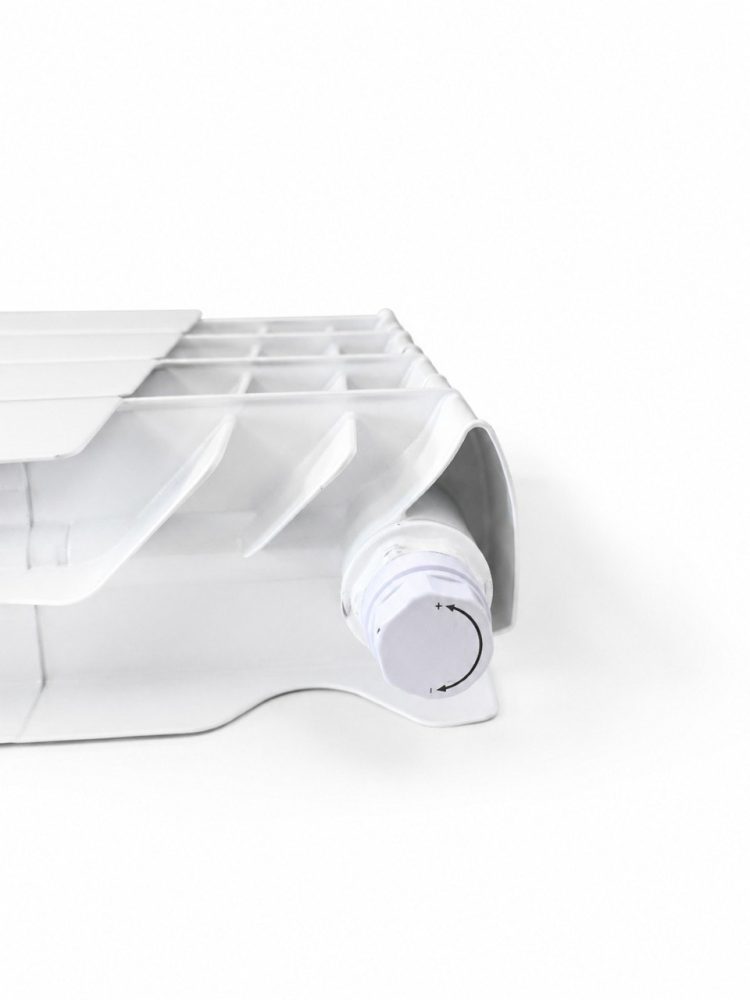
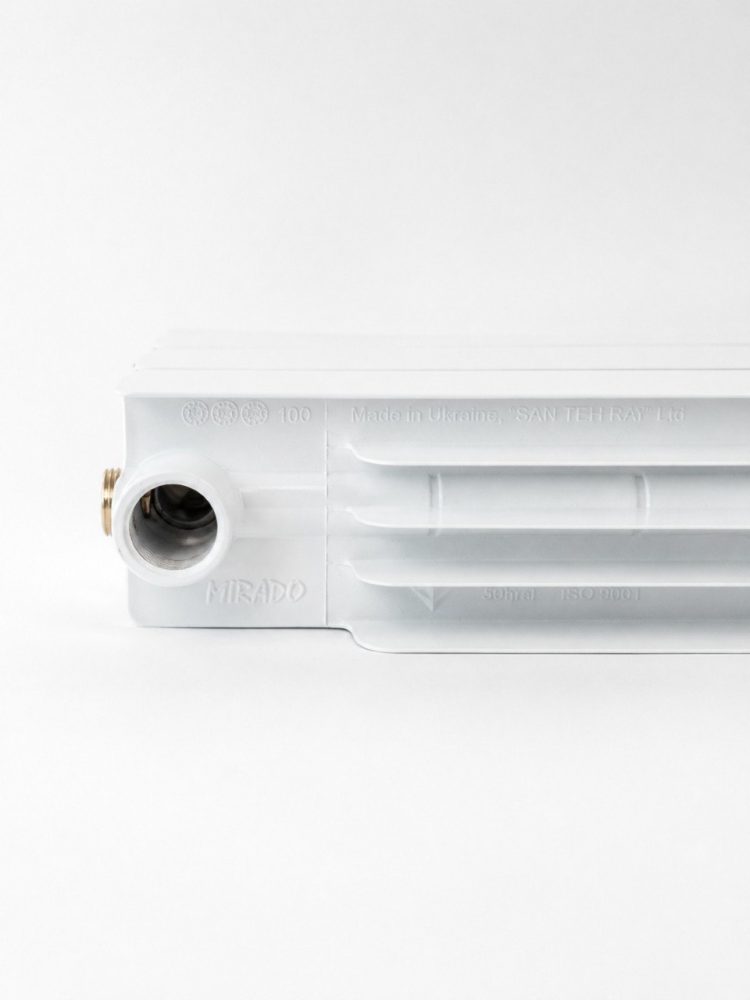
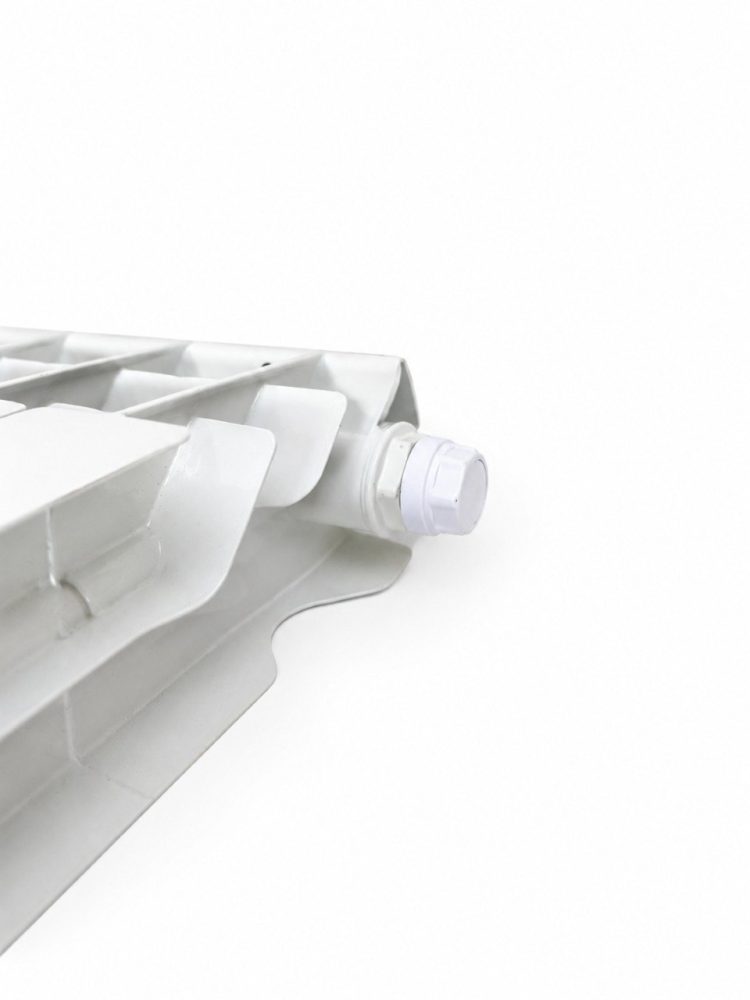
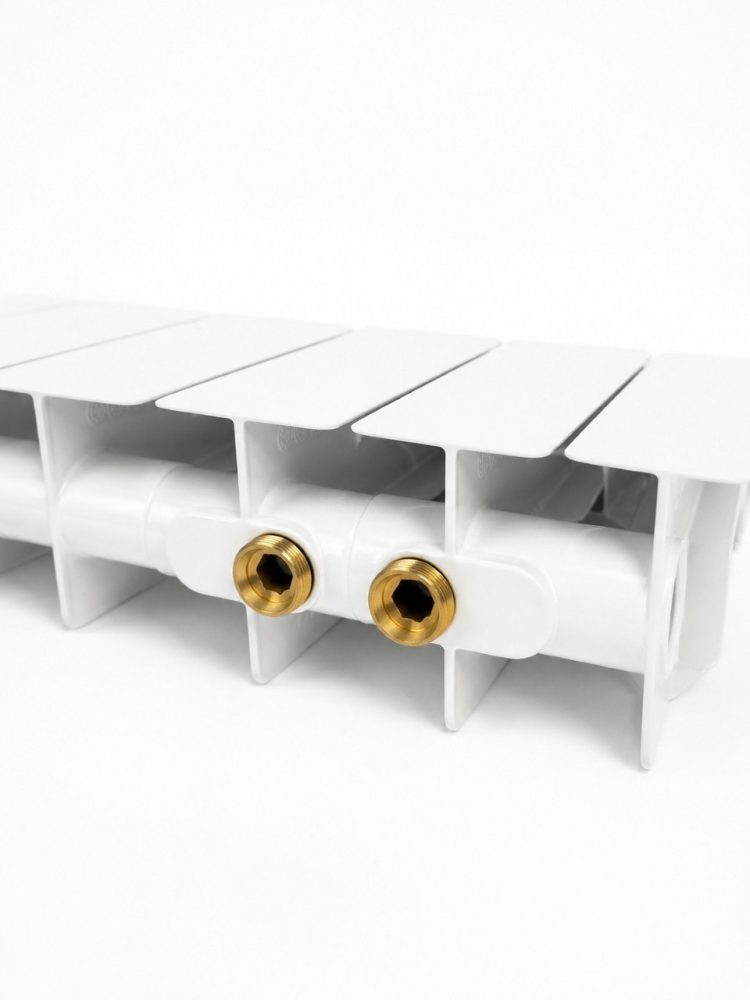
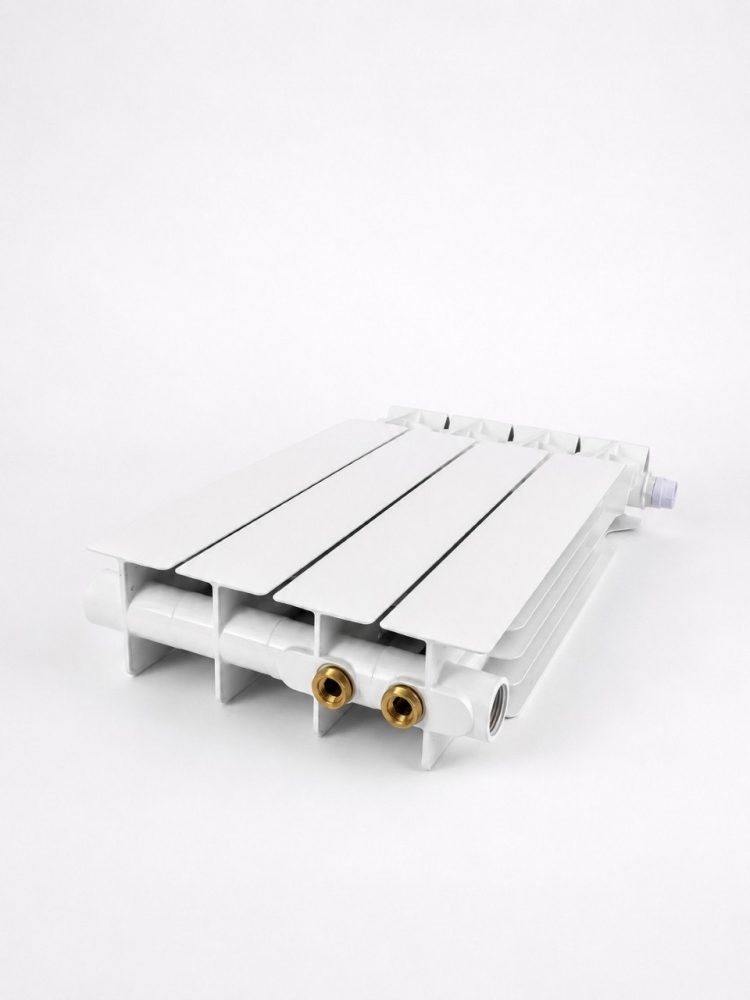
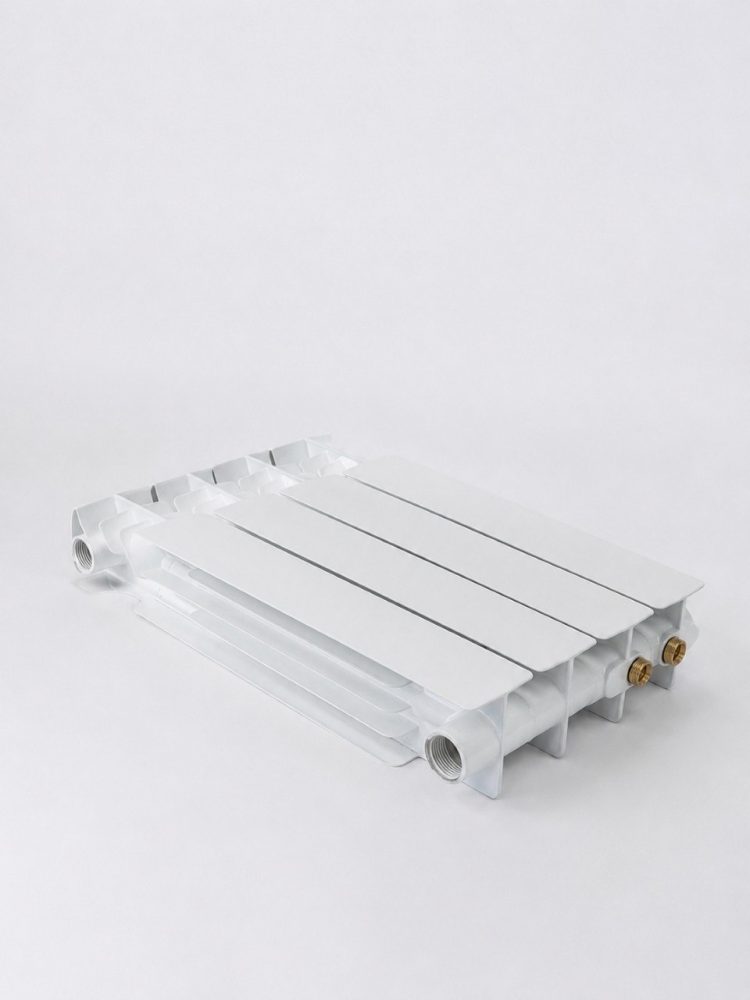
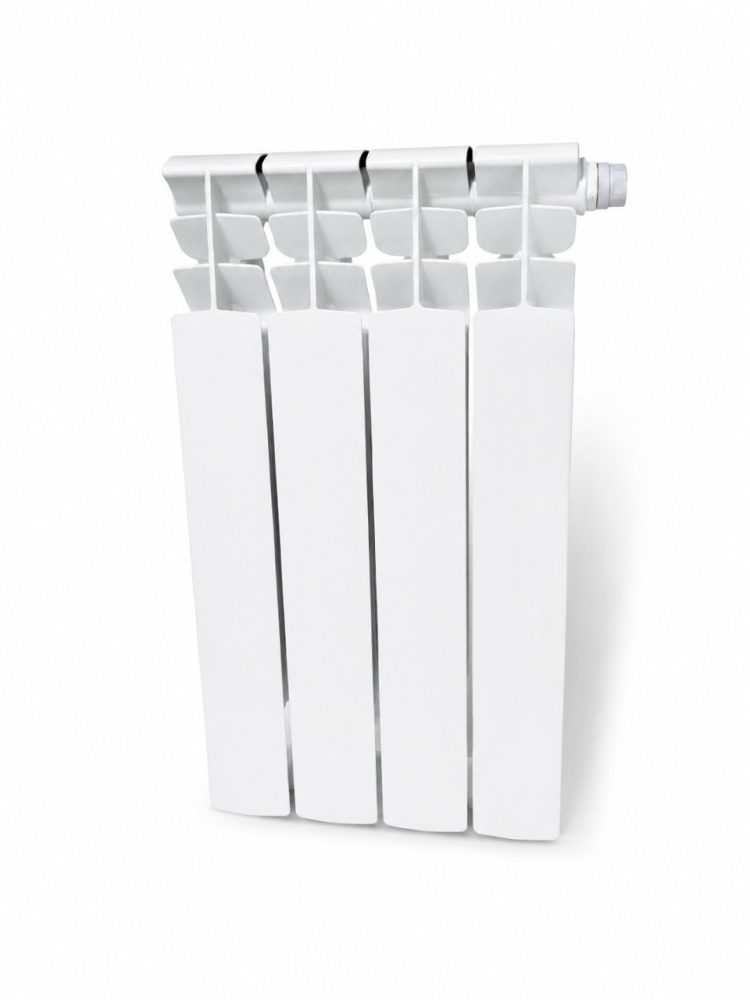
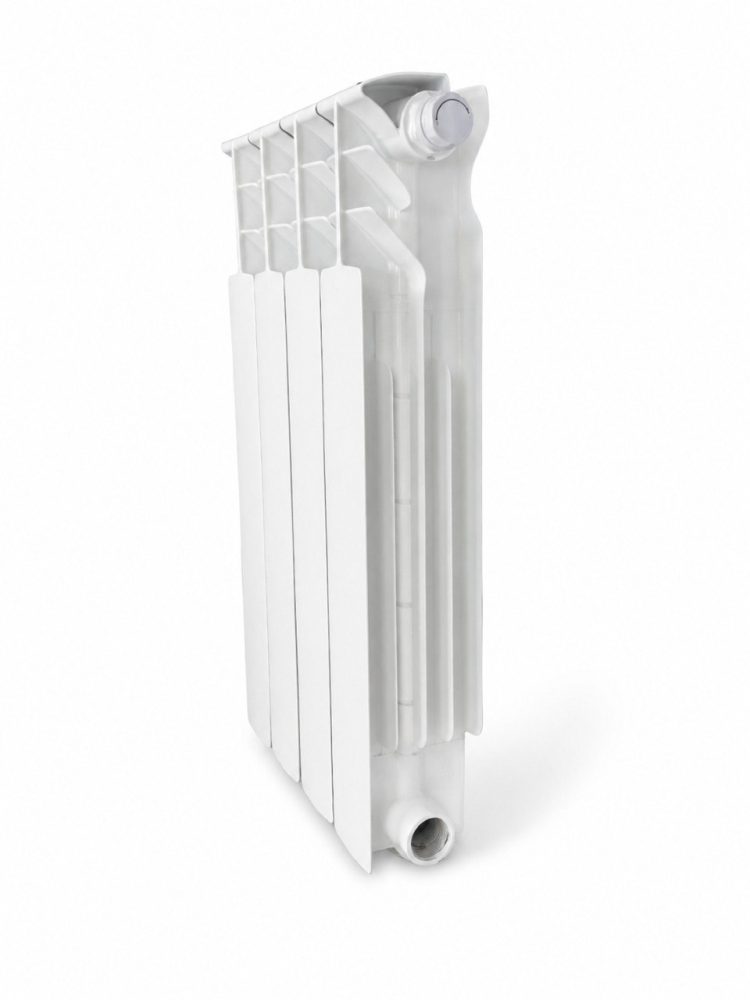

Bimetallic radiators “Mirado” with bottom connection are widely used with any heating systems. The radiator is manufactured on modern equipment from specially prepared aluminum alloy on the outside that meets ENAB46100 quality standards and a solid metal insert with a vertical channel and nozzles inside. Nominal pressure – 30 bar This allows for comfortable operation for at least 50 years. Bimetallic radiators MIRADO with bottom connection are presented with a center distance of 500 mm. Supplied with a thermostatic valve under the thermal head.
Mirado bimetallic sectional radiator – with bottom connection
Advantages of Mirado bimetallic radiators with bottom connection
High heat transfer
Suitable for installation in both standard and low-temperature systems with boilers of any type, including condensing ones
Effective protection against water hammer
The strength of the design allows the radiator to be operated in conditions of high pressure and unprepared coolant.
Radiator painting using anaphoresis method using German technology
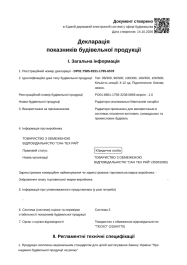
Quality certificates and technical documentation
Manufacturer's warranty for the Mirado bimetallic radiator is 25 years (subject to compliance with the norms and conditions of installation and operation described in the product passport)
Sectional assembly from the manufacturer 4,5,6,7,8,10,12 sections
Characteristics
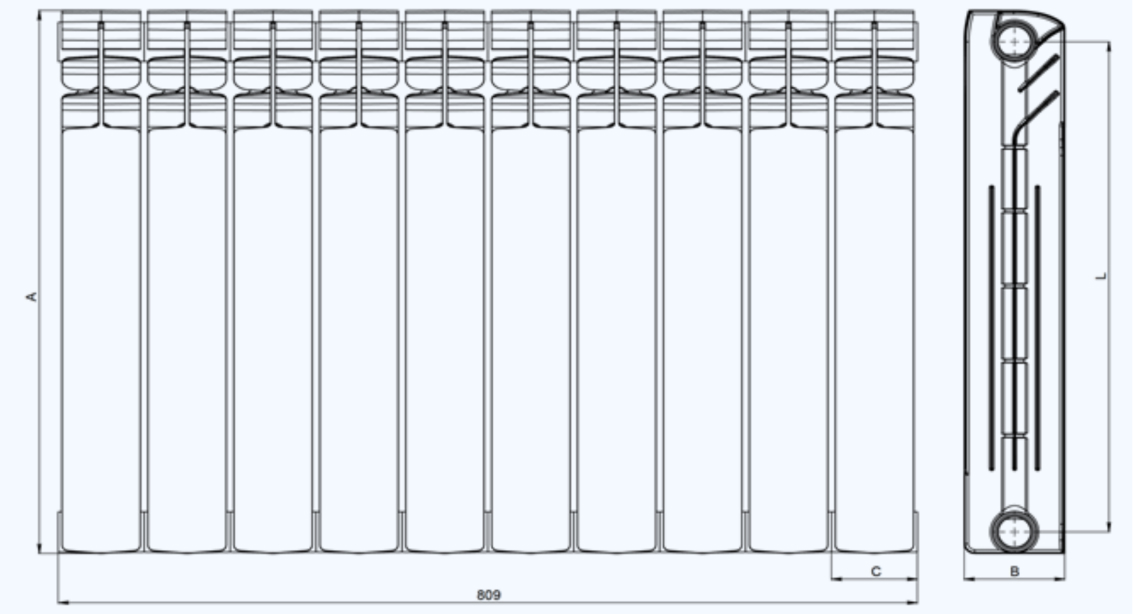
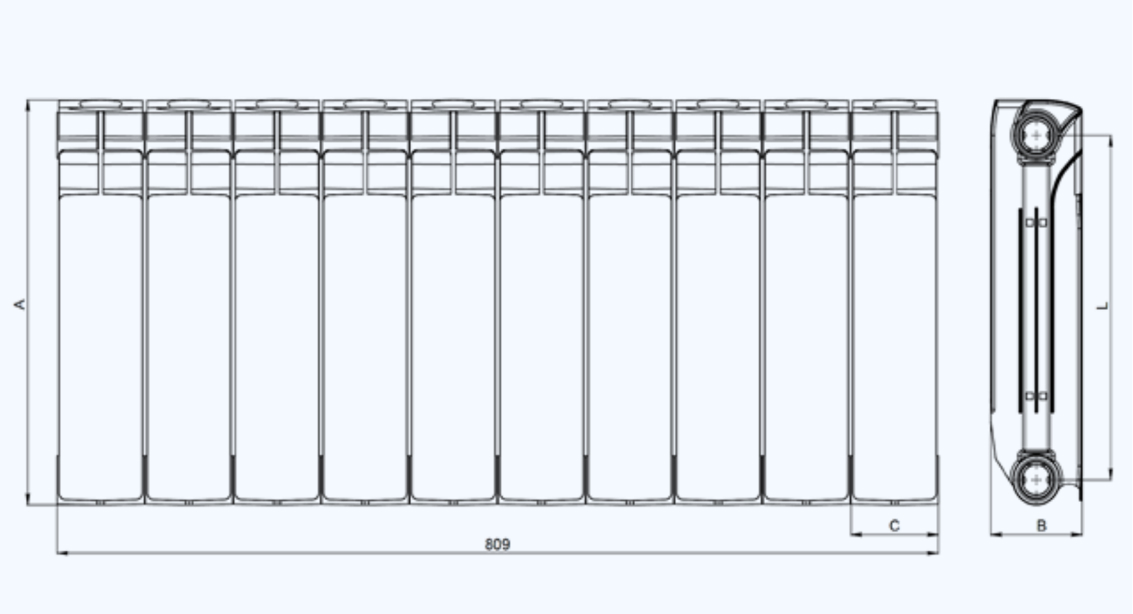
Wheelbase L, мм
500
Section depth В, мм
96
Section width С, мм
80
Section heightSection height А, мм
554
Heat carrier volume, л
0,195
Heat output of one section Δt=70°C, Вт
202
Heat output of one section Δt=60°C, Вт
173
Heat output of one section Δt=50°C, Вт
155
Maximum coolant temperature , °С
120
Maximum working pressure , Бар
30
Test pressure , Бар
45
Hydrogen value , рН
6,5-10,5

Installation and operation recommendations
-
Radiators should only be installed:
- If there is a heat engineering project, which is created by a licensed design organization and certified by the organization responsible for the operation of the heating system of the room in which this radiator is planned to be installed; a specialized installation organization; in accordance with building codes and regulations.
- After the radiator has reached room temperature naturally, without direct influence from heating devices.
- With the mandatory possibility of cutting off the inlet and outlet of the coolant with special fittings.
- Recommended installation and operation conditions:
- For the optimal heat transfer rate of heating radiators, the distance between the radiator and the floor should be 70-120mm, and between the radiator and the window sill should be at least 80mm. The brackets should provide a distance from the wall of 30-50mm, as well as a horizontal position of the radiator.
- Immediately before installing the plugs and adapters, it is necessary to lubricate the gasket with heat-resistant (up to 130°C) silicone sealant.
- It is recommended to install the radiator to the pipelines without removing the protective polyethylene film, which will protect the appearance of your radiator.
- In the case of a one-sided lateral connection of a radiator with a number of sections of more than 12, it is recommended to install a flow guide in the intake manifold, with a length of ≈ ⅔ of the radiator length.
- It is not recommended to rearrange radiators in order to reduce or increase the number of sections, as well as replace individual radiator sections.
- Warranty obligations do not apply to rearranged radiators.
- During operation, it is necessary to periodically remove air from the upper collector using an air release valve.
- It is not recommended to abruptly open the radiator valves in order to avoid water hammer.
- The radiator must be filled with coolant throughout the entire period of operation in accordance with clause 1.3 of this passport in accordance with GOST 31311-2005, EN 442.
- Transportation and storage of radiators should be carried out in accordance with GOST 31311-2005, EN 442.
- The number of sections in serially produced radiators: from 4 to 12.
- During transportation, a slight loosening of the twisted nipple inside the radiator is possible, therefore, before installing the radiator in the heating system, it is necessary to tighten the nipples connecting the sections together.